The Indispensable Role of the Leveling Staff in Topographic Surveying
In the vast world of civil engineering and construction, precision is not just a goal—it's a necessity. At the heart of this precision, particularly in topographic surveying, lies a simple yet critically important tool: the leveling staff. Also known as a leveling rod or stadia rod, the leveling staff is a graduated rod used in conjunction with a leveling instrument to determine elevation differences between points on the ground.

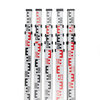
Its design, a series of alternating black and white or red marks, makes it easy to read from a distance, allowing surveyors to accurately measure vertical heights. While seemingly basic, its function is fundamental to creating accurate maps, planning construction projects, and managing land resources.
Why Leveling Staff is Crucial for Topographic Surveys
Topographic surveying is the process of mapping the physical features of the earth's surface, including its elevation. The data collected is essential for a wide range of applications, from designing roads and bridges to assessing flood risks. The leveling staff plays a crucial role in this process by providing the necessary vertical reference. Without it, the precise measurement of elevation changes—which is the very purpose of a topographic survey—would be impossible.
The stability and clear markings of a high-quality leveling staff ensure that the readings taken by the leveling instrument are accurate, directly impacting the integrity of the final survey data. This accuracy is paramount, as even a small error can lead to significant problems in large-scale projects, such as poor drainage, uneven foundations, or miscalculated material quantities.
Key Applications in the Field
The versatility of the leveling staff extends far beyond basic elevation measurements. Its applications in topographic surveying and related fields are numerous:
Contour Mapping: By taking a series of elevation readings across a site, surveyors can create detailed contour maps. These maps show lines connecting points of equal elevation and are vital for architects and engineers in understanding the landscape and planning site layouts. The leveling staff is the primary tool for gathering the raw data needed for these maps.

Site Grading and Excavation: Before any building can begin, a site must be properly graded to a specific elevation. Surveyors use the leveling staff to mark out cut and fill areas, ensuring the land is leveled correctly to prevent drainage issues and provide a stable foundation.
Road and Rail Construction: The design of roads and railways requires precise control over gradients. The leveling staff is used to set out the correct elevations and slopes, ensuring a smooth and safe ride.
Drainage and Utility Layout: For planning water and sewage systems, understanding the natural slope of the land is critical. The leveling staff helps engineers determine the correct gradients for pipes to ensure efficient flow, preventing blockages and flooding.
Choosing the Right Leveling Staff for Your Needs
Not all leveling staffs are created equal. When selecting a staff, surveyors consider several factors to ensure it meets the demands of their work.

Materials like aluminum and fiberglass offer durability and are lightweight, making them easy to transport. The type of graduation—whether E-type (alternating "E" shapes) or metric—affects readability.
Telescoping or folding designs are also popular for their portability and ease of storage.
There are many types of Leveling Staff measuring tools. Mutoop manufacturers supply different types of options. Friends who have needs can quickly contact Mutoop manufacturers.